NICK POWDTHAVEE

ECONOMICS · BEHAVIOURAL SCIENCE · WELL-BEING

Nattavudh (Nick)
Powdthavee

Professor of Economics
Nanyang Technological University, Singapore

I study the economics of well-being: how our circumstances, choices, and beliefs shape the quality of our lives. My research spans happiness, inequality, social comparisons, and human judgment, including how large language models represent and evaluate people.

Download CV PDFGoogle Scholar

RESEARCH

Understanding well-being
and human behaviour.

Happiness & well-being

Income, health, relationships, and life events—and what they tell us about the quality of life.

Inequality & beliefs

Social comparisons, fairness, stereotypes, and the beliefs that shape judgments about others.

AI & human judgment

How large language models predict well-being and evaluate research, and where their judgments go wrong.

PUBLICATIONS

Selected publications

A selection of work across three connected research programmes. The complete chronological publication list follows below.

01

Human well-being & the life course

How health, relationships, work, income, and major life events shape the quality of people’s lives.

  1. Does happiness adapt?Journal of Public Economics · 2008
  2. Putting a price tag on friends, relatives, and neighboursJournal of Socio-Economics · 2008
  3. Putting different price tags on the same health problemJournal of Health Economics · 2011
  4. What predicts a successful life?Economic Journal · 2014
  5. The effects of retirement on sense of purpose in lifePsychological Science · 2021
  6. COVID-19, lockdowns and well-beingJournal of Public Economics · 2021

02

Inequality, beliefs & social behaviour

How comparisons, fairness, identity, stereotypes, and beliefs influence judgment and behaviour.

  1. Daughters and left-wing votingReview of Economics and Statistics · 2010
  2. Would you pay for transparently useless advice?Review of Economics and Statistics · 2015
  3. Locus of control and early childhood skill formationEconomic Journal · 2018
  4. Buying happiness in an unequal worldPersonality and Social Psychology Bulletin · 2020
  5. What we think others think and do about climate changePsychological Science · 2025
  6. Curb your positive stereotypesPersonality and Social Psychology Bulletin · 2026
All publications 2005–2026

2026

  1. Information about well-being norms shifts reported beliefs but leaves redistribution preferences largely unchanged (with Anthony Lepinteur). Behavioural Public Policy, forthcoming.
  2. Simulating life paths with digital twins: AI-generated future selves influence decision-making and expand human choice (with Rachel Poonsiriwong, Chayapatr Archiwaranguprok, Constanze Albrecht, Peggy Yin, Hal Hershfield, Monchai Lertsutthiwong, Kavin Winson, and Pat Pataranutaporn). Proceedings of the Augmented Humans International Conference 2026 (AHs ’26), 264–278.Read paper
  3. Large language models and human judgment in scientific peer review: Evidence from over 1,000 published economics papers (with Pat Pataranutaporn, Chayapatr Achiwaranguprok, and Pattie Maes). Economica, forthcoming.
  4. Curb your positive stereotypes: Counter-stereotypical interventions improve attention to inequality and discrimination against Asian Americans. Personality and Social Psychology Bulletin, 52(8), 2596–2610.Read paper
  5. Good reputation as insurance: How reputation moderates fairness perceptions in the market (with Danae Arroyos-Calvera). Review of Behavioural Economics.Read paper
  6. Rising temperatures and physical pain: Evidence from over 2 million U.S. residents (with Cheng Keat Tang and Lucia Macchia). Ecological Economics, 241, 108871.Read paper

2025

  1. Simulating human well-being with large language models: Systematic validation and misestimation across 64,000 individuals from 64 countries (with Pat Pataranutaporn, Chayapatr Archiwaranguprok, and Pattie Maes). Proceedings of the National Academy of Sciences, 122(48), e2519394122.Read paper
  2. Understanding the role of pluralistic ignorance in biodiversity conservation: A research agenda (with Sandra J. Geiger, Hirotaka Imada, Carya Maharja, Valeria Vitale, Lei Zhang, Claudio D. Rosa, Zenith N. C. Delabrida, Kristian S. Nielsen, Franz Essl, and Mathew P. White). Global Environmental Change, 95, 103043.Read paper
  3. What we think others think and do about climate change: A multicountry test of pluralistic ignorance and public-consensus messaging (with Sandra J. Geiger, Jana K. Köhler, Zenith N. C. Delabrida, Karla A. Garduño-Realivazquez, Christian A. P. Haugestad, Hirotaka Imada, Aishwarya Iyer, Carya Maharja, Daniel C. Mann, Michalina Marczak, Olivia Melville, Sari R. R. Nijssen, Radisti A. Praptiwi, Gargi Ranade, Claudio D. Rosa, Valeria Vitale, Małgorzata Winkowska, Lei Zhang, and Mathew P. White). Psychological Science, 36(6), 421–442.Read paper
  4. Unveiling the effects of hidden luck and merit on redistribution in groups (with Juliane V. Wiese, Jonathan X. W. Yeo, and Yohanes E. Riyanto). Journal of Behavioural and Experimental Economics, 117, 102392.Read paper
  5. How do humans respond to large realized losses? (with Redzo Mujcic). Journal of Economic Psychology, 107, 102805.Read paper
  6. The shadow prices of voluntary caregiving: Using well-being panel data to estimate the cost of informal care (with Rebecca McDonald). Journal of Benefit-Cost Analysis, 16(1), 107–136.Read paper

2024

  1. Are environmental concerns deterring people from having children? Longitudinal evidence on births in the UK (with Andrew Oswald and Ben Lockwood). Ecological Economics, 220, 108184.Read paper

2023

  1. Luck or right? An experiment on preferences for redistribution following inheritance of opportunity. Journal of Behavioural and Experimental Economics. 106, 102078Read paper
  2. Income is more protective against pain in more equal countries (with Cheng Keat Tang and Lucia Macchia). Social Science & Medicine. 333, 116-181.Read paper
  3. Does money strengthen our social ties? Longitudinal evidence of lottery winners (with Joan Costa-Font). Rationality and Society, 35(2), 139-166.Read paper
  4. Large losses from little lies: Strategic gender misrepresentation and cooperation (with Michalis Drouvelis, Jennifer Gerson, and Yohanes E. Riyanto. PLOS One, 18(3), e0282335.Read paper
  5. The midlife crisis? (with Osea Giuntella, Sally McManus, Redzo Mujcic, Andrew Oswald, and Ahmed Tohamy). Economica, 65-110.Read paper
Earlier publications 2005–2022

2022

  1. Robust ranking of happiness outcomes: A median regression perspectives (with Le-Yu Chen, Ekterina Oparina, and Sorawoot Srisuma). Journal of Economic Behavior and Organization, 200, 672-686.Read paper

2021

  1. The effects of retirement on sense of purpose in life: Crisis or opportunity? (with Ayse Yemiscigil and Ashley Whillans). Psychological Science, 32(11), 1856-1864.Read paper
  2. Are newly self-employed overly optimistic about their future well-being? (with Reto Odermatt and Alois Stutzer). Journal of Behavioural and Experimental Economics, 95, 101779.Read paper
  3. Do perceptions of economic well-being predict the onset of war and peace? (with Eik Swee and Haikun Zhan), Journal of Behavioural and Experimental Economics, 95, 101765.Read paper
  4. Risk compensation during COVID-19: The impact of face mask usage on social distancing (with Ashley Luckman, Hossam Zeitoun, Andrea Isoni, Graham Loomes, Ivo Vlaev, and Daniel Read). Journal of Experimental Psychology: Applied, 27(4), 722-738.Read paper
  5. Education and pro-environmental attitudes and behaviours: A nonparametric regression discontinuity analysis of a major schooling reform in England and Wales. Ecological Economics, 181, 106931.Read paper
  6. When face masks signal social identity: Explaining the deep face mask divide during the COVID-19 pandemic (with Yohanes E. Riyanto, Erwin C.L. Wong, Jonathan X.W. Yeo, and Qi Yu Chan). PLoS One, 16(6), e0253195.Read paper
  7. The importance of capital in closing the entrepreneurial gender gap: A longitudinal study of lotter wins (with Sarah Fleche and Anthony Lepinteur). Journal of Economic Behavior and Organization, 188, 591-607.Read paper
  8. Covid-19, lockdowns and well-being: Evidence from google trends (with Abel Brodeur, Andrew Clark and Sarah Fleche). Journal of Public Economics, 193,104346.Read paper

2020

  1. Gender norms, fairness and relative working hours within households (with Sarah Fleche and Anthony Lepinteur). Labour Economics, 65, 101866.Read paper
  2. Is there a link between air pollution and impaired memory? Evidence on 34,000 English citizens (with Andrew Oswald). Ecological Economics, 169, 106485.Read paper
  3. Does it pay to bet on your favourite to win? Evidence on experienced utility from the 2018 FIFA World Cup experiment (with Lajos Kossuth, Donna Harris, and Nick Chater). Journal of Economic Behavior & Organization, 171, 35-58.Read paper
  4. Buying happiness in an unequal world: Rank of income more strongly predict well-being in more unequal countries (with Lucia Macchia and Anke Plagnol). Personality and Social Psychology Bulletin, 46(5), 769-780.Read paper

2019

  1. Who got the Brexit Blues? The effect of Brexit on subjective wellbeing in the UK (with Anke Plagnol, Paul Frijters, and Andrew Clark). Economica, 88(343), 471-494.Read paper

2018

  1. Lower-rated publications do lower academics’ judgments of publication lists: Evidence from a survey experiment of economists (with Yohanes E. Riyanto and Jack Knetsch). Journal of Economic Psychology, 66, 33-44.Read paper
  2. The welfare implications of addictive substances: A longitudinal study of life satisfaction of drug users (with Julie Moschion). Journal of Economic Behavior and Organization, 146, 206-221.Read paper
  3. Do you have to win it to fix it? A longitudinal study of lotery winners and their health care demand (with Terence C. Cheng and Joan Costa-Font). American Journal of Health Economics, 4(1), 26-50.Read paper
  4. Locus of control and its intergenerational implications for early childhood skill formation (with Warn N. Lekfuangfu, Nele Warrinnier, and Francesca Cornaglia). Economic Journal, 128(608), 298-329.Read paper

2017

  1. Top incomes and human well-being: Evidence from the Gallup World Poll (with Richard V. Burkhauser and Jan-Emmanuel De Neve), Journal of Economic Psychology, 62, 246-257.Read paper
  2. Longitudinal evidence for a midlife nadir in human well-being (with Terence C. and Andrew J. Oswald). Economic Journal, 127(599), 126-142.Read paper

2016

  1. Can having internal locus of control insure against negative shocks? Psychological evidence from panel data (with Hielke Buddelmeyer), Journal of Economic Behavior and Organization, 122, 88-109.Read paper

2015

  1. Trust and happiness: comparative study before and after the Great East Japan earthquake (with Eiji Yamamura, Yoshiro Tsutsui, Chisago Yamane, and Shoko Yamane). Social Indicators Research, 123, 919-935.Read paper
  2. Does more education improve health habits? Evidence from the school reforms in Australia (with Jinhu Li). Social Science and Medicine, 127, 83-91.Read paper
  3. Can priming cooperation increase public good contributions? (with Michalis Drouvelis and Robert Metcalfe). Theory and Decision, 79, 479-492.Read paper
  4. Would you pay for transparently useless advice? A test of boundaries of beliefs in the folly of predictions (with Yohanes E. Riyanto). Review of Economics and Statistics, 97, 257-272.Read paper
  5. Life satisfaction and sexual minorities: evidence from Australia and UK (with Mark Wooden). Journal of Economic Behavior and Organization, 116, 107-126.Read paper
  6. Are happier people less judgmental of other people's selfish behaviours? Laboratory evidence from trust and gift exchange games (with Michalis Drouvelis). Journal of Behavioural and Experimental Economics, 58, 111-123.Read paper
  7. What's the good of education on our overall quality of life? A simultaneous equation model of education and life satisfaction for Australia (with Warn N. Lekfuangfu and Mark Wooden). Journal of Behavioural and Experimental Economics, 54, 10-21.Read paper

2014

  1. Do Different Work Characteristics Have Different Distributional Impacts on Job Satisfaction? A Study of Slope Heterogeneity in Workers’ Well-Being (with Aekapol Chongvilaivan). British Journal of Industrial Relations, 52, 426-444.Read paper
  2. What predicts a successful life? A life-course model of wellbeing (with Richard Layard, Andrew E. Clark, Francesca Cornaglia, and James Vernoit). Economic Journal, 124, F720-F738.Read paper
  3. What childhood characteristics predict psychological resilience to economic shocks in adulthood? Journal of Economic Psychology, 45, 84-101.Read paper

2013

  1. Parental unemployment and children’s happiness: A longitudinal study of young people’s wellbeing in unemployed households (with James Vernoit). Labour Economics, 24, 253-263.Read paper
  2. Is Personality Fixed? Personality Changes as Much as “Variable” Economic Factors and More Strongly Predicts Changes to Life Satisfaction (with Chris M. Boyce and Alex Wood). Social Indicators Research, 111, 287-305.Read paper

2012

  1. Jobless, friendless, and broke: What happens to different areas of life before and after unemployment? Economica, 79, 557-575.Read paper
  2. Thinking about it: A note on attention and well-being losses from unemployment (with Paul Dolan). Applied Economics Letters, 19, 325-328.Read paper

2011

  1. Anticipation, free rider problem, and adaptation to trade union: Re-examining the curious case of dissatisfied union members. Industrial and Labor Relations Review, 64, 1000-1019.Read paper
  2. Destruction and distress: Using a quasi-experiment to show the effects of the September 11 attack on subjective well-being in the UK (with Robert Metcalfe and Paul Dolan). Economic Journal, 121, F81-F103.Read paper
  3. Putting different price tags on the same health problem: Re-evaluating the well-being valuation approach (with Bernard van den Berg). Journal of Health Economics, 30, 1032-1043.Read paper

2010

  1. Does education reduce the risk of hypertension? Estimating the biomarker effect of compulsory schooling in England. Journal of Human Capital, 4, 173-202.Read paper
  2. How much does money really matter? Estimating causal effects of income on happiness. Empirical Economics, 39, 77-92.Read paper
  3. Daughters and leftwing voting (with Andrew J. Oswald). Review of Economics and Statistics, 92, 213-227.Read paper

2009

  1. Ill-health as a household norm: Evidence from other people’s health problems. Social Science and Medicine, 68, 251-259.Read paper
  2. How important is rank to individual perception of economic standing? A within-community analysis. Journal of Economic Inequality, 7, 225-248.Read paper
  3. I can’t smile without you: Spouse correlation in life satisfaction. Journal of Economic Psychology, 30, 675-689.Read paper
  4. The socio-economic gap of university drop out (with Anna Vignoles). B.E. Journal of Economic Analysis and Policy: Contribution, 9(1), 19.Read paper
  5. What happens to people before and after disability? Focusing effects, lead effects, and adaptation in different areas of life. Social Science and Medicine, 69, 1834-1844.Read paper
  6. Think having children will make you happy? Psychologist, 22, 308-311.

2008

  1. Putting a price tag on friends, relatives, and neighbours: Using surveys of life satisfaction to value social relationships. Journal of Socio-Economics, 37, 1459-1480.Read paper
  2. Does happiness adapt? A longitudinal study of disability with implications for economists and judges (with Andrew J. Oswald). Journal of Public Economics, 92, 1061-1077.Read paper
  3. Death, happiness equations, and the calculation of compensatory damages (with Andrew J. Oswald). Journal of Legal Studies, 37, S217-S252.Read paper
  4. Mental health of parents and life satisfaction of children: A within-family analysis of intergenerational transmission of wellbeing (with Anna Vignoles). Social Indicators Research, 88, 397-422.Read paper

2007

  1. Obesity, unhappiness, and the challenge of affluence (with Andrew J. Oswald). Economic Journal, 117, F441-454.
  2. Feeling richer or poorer than others: A cross-sectional and panel analysis of subjective economic status in Indonesia. Asian Economic Journal, 21, 169-194.Read paper
  3. Are there geographical variations in the psychological cost of unemployment in South Africa? Social Indicators Research, 80, 629-652.Read paper

2005

  1. Unhappiness and crime: Evidence from South Africa. Economica (2005), 72, 531-547.Read paper

Under revision

  • Can large language models predict public perceptions of support for climate action across 125 countries? (with Sandra J. Geiger). PNAS Nexus, R&R with minor revision.
Working papers
  • Can AI solve the peer review crisis? A large-scale experiment on LLM’s performance and biases in evaluating economics papers (with Pat Pataranutaporn and Pattie Maes).Working paper
  • AI biases towards rich and powerful surnames (with Pat Pataranutaporn and Pattie Maes).
  • Do beliefs in the model minority stereotype reduce attention to inequality that adversely affects Asian Americans? (with Shuai Chen and Juliane Wiese).Working paper
  • Temperature variability and natural disasters: Evidence for economists, climate researchers, and policymakers (With Aatishya Mohantya, Cheng Keat Tang, and Andrew Oswald).Working paper
  • When transparency fails: How altruistic framing sustains demand for useless advice despite complete information (with Yohanes Riyanto and Xiaojie Zhang).Working paper
  • Large language models as foundation models for human well-being (with Pat Pataranutaporn, Chayapatr Achiwaranguprok, and Pattie Maes).

BOOKS

The science of a good life

2018 · PRINCETON UNIVERSITY PRESS

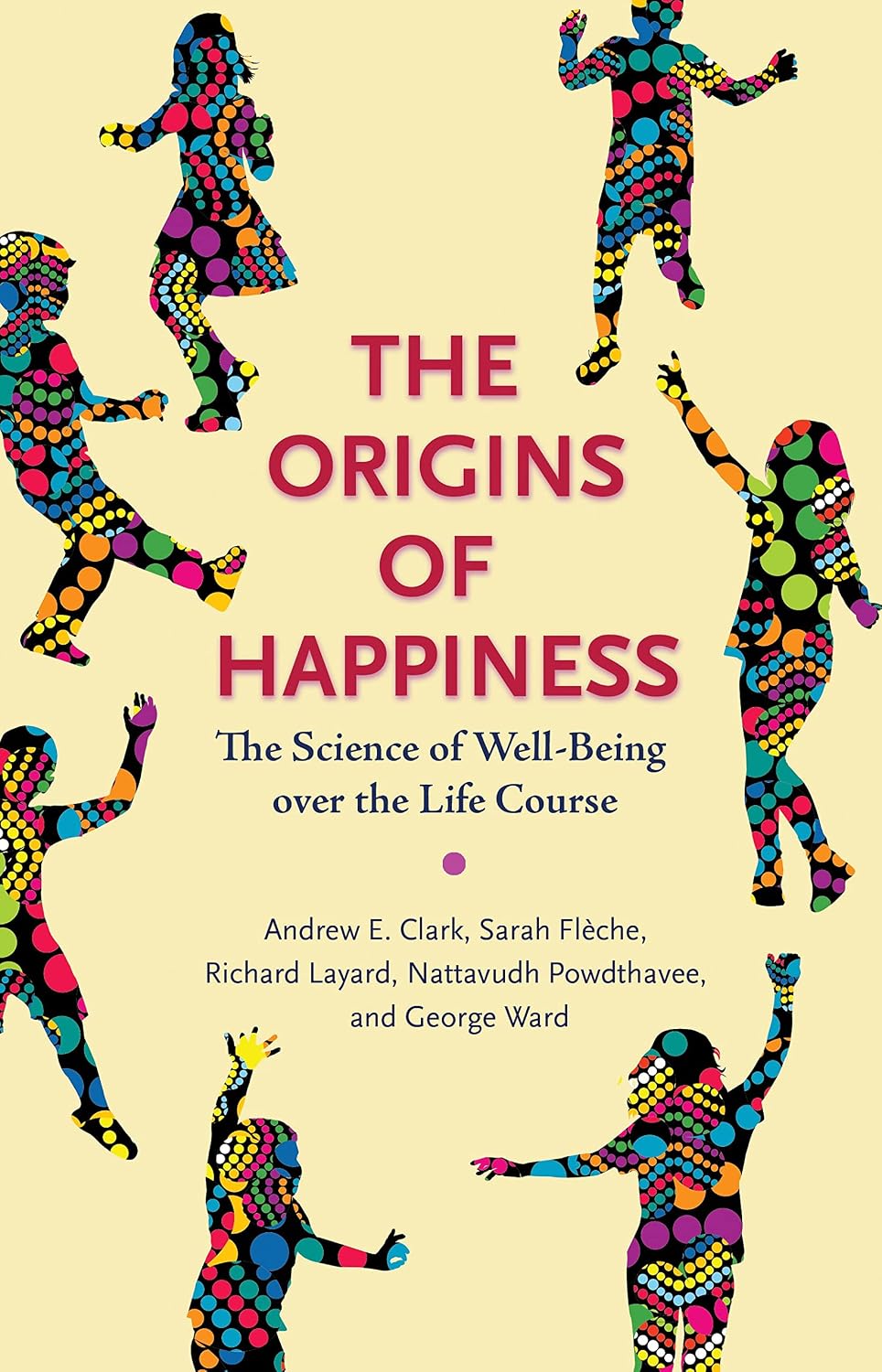
Cover of The Origins of Happiness

The Origins of Happiness

The Science of Well-Being Over the Life Course

With Andrew E. Clark, Sarah Fleche, Richard Layard, and George Ward.

2010 · ICON BOOKS
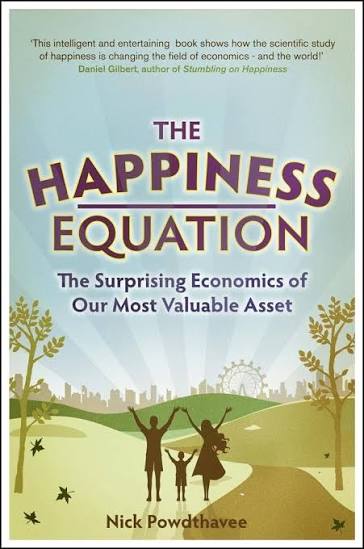
Cover of The Happiness Equation

The Happiness Equation

The Surprising Economics of Our Most Valuable Asset

Nattavudh Powdthavee

TEACHING

Economics, with people
at its centre.

Nanyang Technological University

My teaching at NTU has included the Economics of Well-being and the Economics of Education.

Previous teaching

At Warwick Business School, I taught undergraduate, postgraduate, MBA, and executive courses covering well-being, behavioural economics, judgment and decision making, health economics, and applied microeconometrics.

Outstanding Contribution to Teaching, Warwick Business School: 2018–19, 2019–20, and 2021–22.

CONTACT

Get in touch

School of Social Sciences
Nanyang Technological University
Singapore